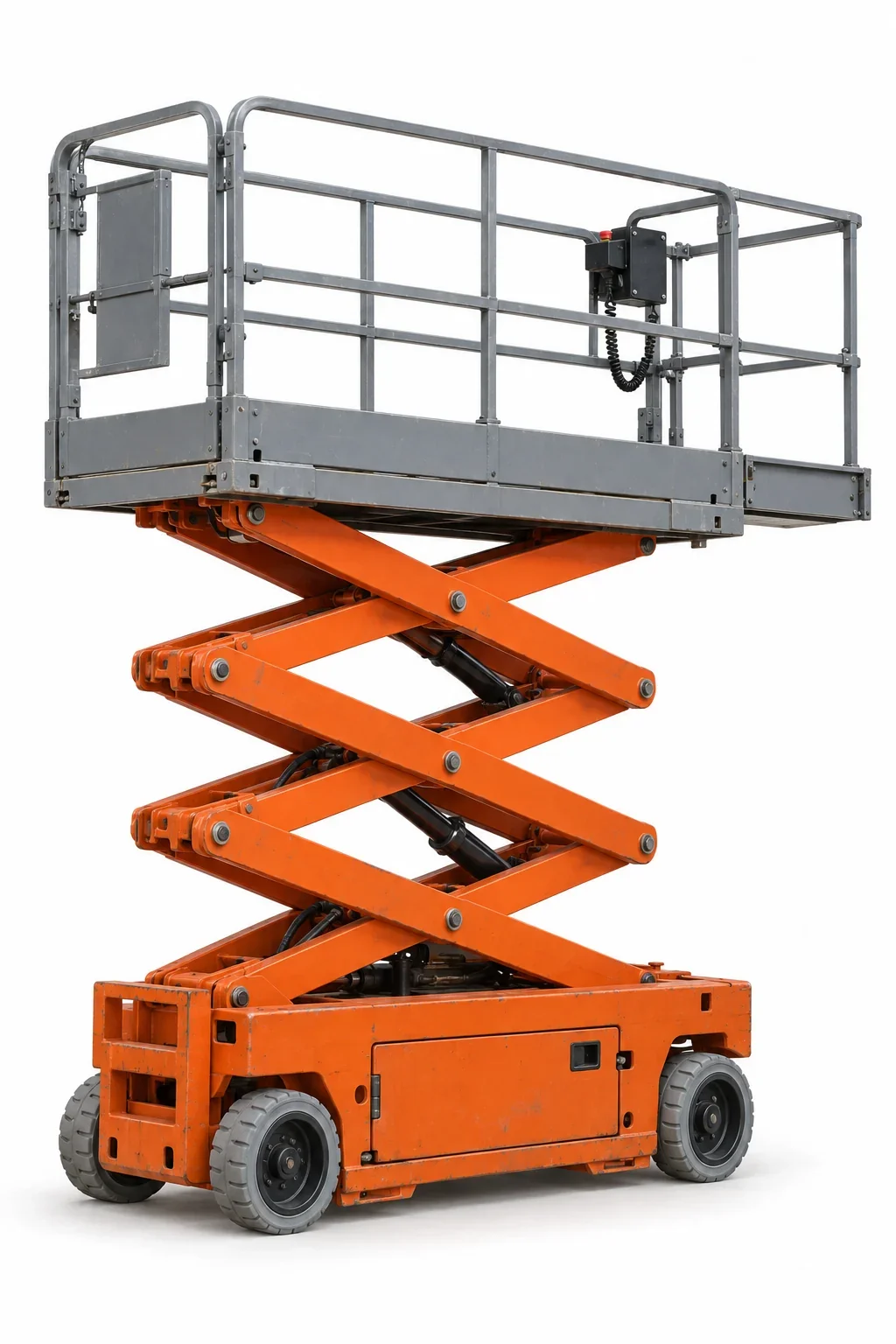
Match the platform to the approach and the height
- Start with the platform height needed to place hands on the work. Outdoor models cover a range suited to façade panels, parapet tasks, and roof edge detailing.
- Consider how the machine reaches the spot: ramps, gravel, or soft soil along the Southeast corridor can limit slab units.
Local terrain and weather considerations
- Karst topography and sinkhole risk increase the importance of a lift with ground clearance and stabilizing support to handle variable bearing conditions.
- Spring tornado season can tighten exterior work windows. Plan for weather holds that affect schedule buffers and consider indoor segments using electric lifts at /electric-scissor-lift-rental/ when possible.
Platform advantages outdoors
- Wide deck space supports crews handling exterior panels, conduit, and hardware.
- Straight-up geometry suits repetitive tasks along façades or long runs where outreach is not required.
When a different aerial type fits better
- If the task sits behind landscaping, canopies, or utilities, horizontal reach from an articulating or telescopic boom at /boom-lift-rental/ may be necessary.
- For mixed sites with indoor and outdoor segments, pair a rough‑terrain scissor for the yard with a compact electric scissor for interior punch.
Actual conditions, the selected unit’s instructions, and site procedures govern exterior or elevated work.